
If you want to consistently hit the Genius rank, memorizing random words won't cut it. You need to understand how words are built. Mastering Spelling Bee prefixes and suffixes is the single most effective strategy for rapidly expanding your word count and identifying hidden pangrams.
Table of Contents
The Power of Spelling Bee Prefixes and Suffixes
Suffixes are the easiest way to double your score. The moment you open the puzzle, look for combinations like -ING, -ED, -TION, -LY, or -ABLE. If the honeycomb contains the letters I, N, and G, you should mentally attach "-ING" to every verb you find. Finding "PLAY" immediately means you also have "PLAYING", netting you extra points for almost zero cognitive effort.
Essential Prefixes to Spot Early
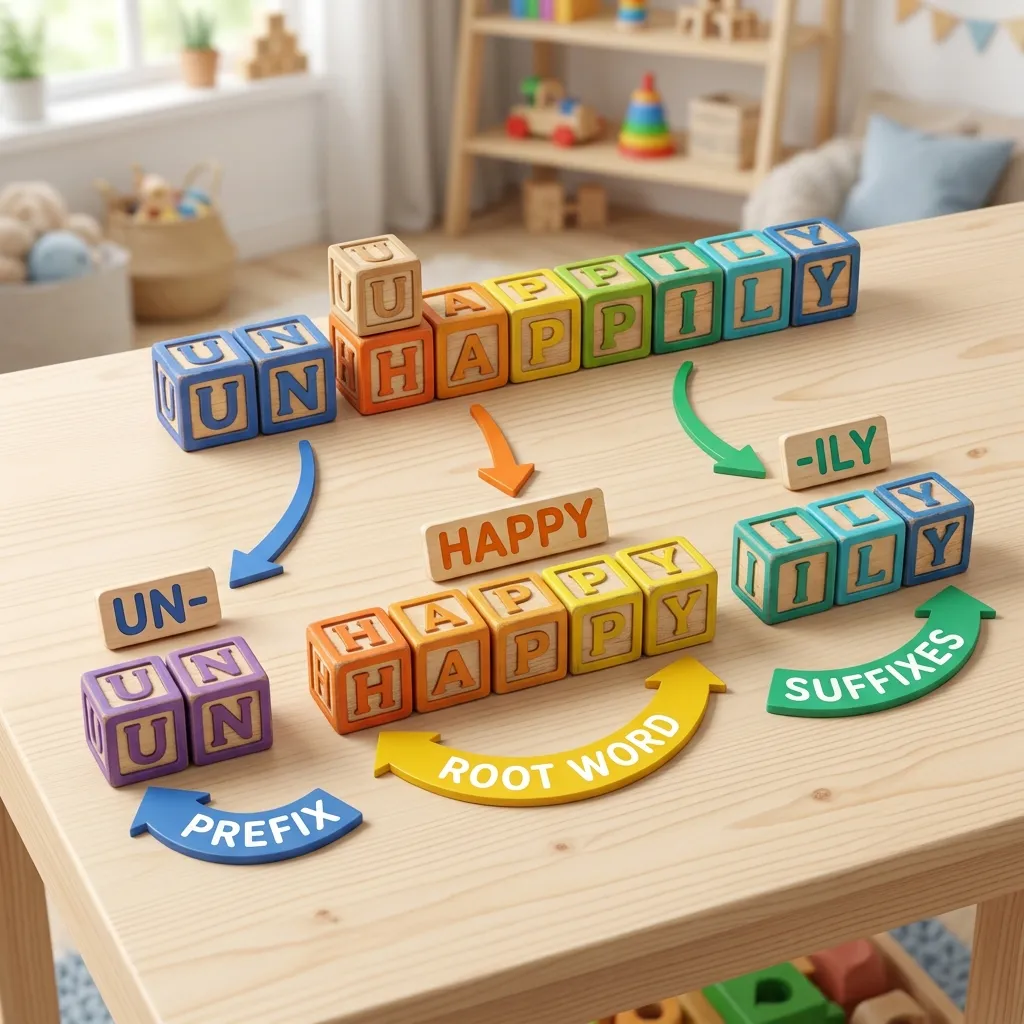
Prefixes work similarly but require a bit more scanning. Look for UN-, RE-, IN-, DIS-, and NON-. If the puzzle has 'R' and 'E', practically every verb can be tested with a 'RE-' prefix (e.g., BUILD and REBUILD). If a word is rejected, don't worry—understanding why words are rejected is part of the learning process.
Chaining Affixes Together
The real magic happens when you chain these elements together. A root word like "ACCEPT" can become "UNACCEPTABLE". This kind of structural expansion is exactly how top players find the daily Pangram so quickly. By breaking the honeycomb down into modular blocks of letters rather than looking for whole words, you hack the game's core mechanic.

Building a Daily System
When you start your daily game, scan for affixes before you even look for your first word. Group the letters in your mind: "Okay, I have E-D, I have U-N". This structural approach is the foundation of the 15-minute genius workflow.
If you ever get stuck trying to apply these affixes to the daily puzzle, you can always visit the Spelling Bee Hub homepage to use our live interactive solver and hint generators to push you over the finish line.
Advanced Suffix Combinations to Look For
Once you have mastered the basic prefixes and suffixes, it is time to elevate your game by looking for compound or stacked suffixes. The English language allows for incredible flexibility when modifying root words, and the Spelling Bee engine rewards players who exploit this.
Consider the suffix -TION. If you spot it, immediately check to see if you also have the letter 'A'. If so, you can often build -ATION, which opens up an entirely new tier of vocabulary. Furthermore, if you have an 'S', you can pluralize almost any noun you create (e.g., creating both "NATION" and "NATIONS").
Another powerful combination is the adverbial stack. If you have an adjective ending in -IC (like "MAGIC"), and the board contains 'A', 'L', and 'Y', you can often transition straight into -ICALLY (e.g., "MAGICALLY"). This instantly turns a 5-point word into a 9-point powerhouse. Memorizing these compound structures allows you to extract maximum value from a single root word, often securing a quarter of your Genius points from a single linguistic family.
Frequently Asked Questions About Affixes
Are all standard prefixes accepted?
Most common prefixes like UN-, RE-, and DIS- are highly reliable. However, highly technical or scientific prefixes (like specific metric multipliers) may be rejected if the resulting word is considered too obscure by the editorial team.
What is the best suffix for finding pangrams?
-ING is historically one of the most reliable suffixes for uncovering pangrams. Because it uses three very common letters, it often leaves the remaining four letters of the honeycomb perfectly suited to form a strong, distinctive root verb.
Can you use a prefix and a suffix at the same time?
Absolutely! This is one of the best strategies for achieving the Queen Bee rank. If the board supports it, taking a root word and sandwiching it between a prefix and suffix (e.g., UN-ACCEPT-ABLE) yields massive points.